
Technically Speaking | 11 NOV 2025
Should I Buy an EV? Insights from an Industry Expert
Tech Tips from Our Engineers at Bamberger Amco Polymers
With the recent rise in availability – and performance – of electric vehicles (EVs), you might be curious about making the switch from a more traditional, gas-powered car.
To support our list of pros and cons, we’ll draw on the expertise of Brian Ahrens, Bamberger Amco Polymers' Business Director of Mobility. Brian speaks from 35 years of experience with automotive materials and sustainability.
What Kind of EV is Right for Me?
You might already be asking questions like:
• Should I choose a Battery Electric Vehicle (BEV) or one of several hybrid options?
• Should I worry about range and battery size?
• Will I still get a tax credit for my purchase?
We’ll tackle all those and more, but our first step into the world of passenger vehicle electrification should be defining key internal combustion engine (ICE) and EV terminology.
Important EV Terms
The graphic below illustrates the propulsion system gradient from traditional ICE to fully electric versions.
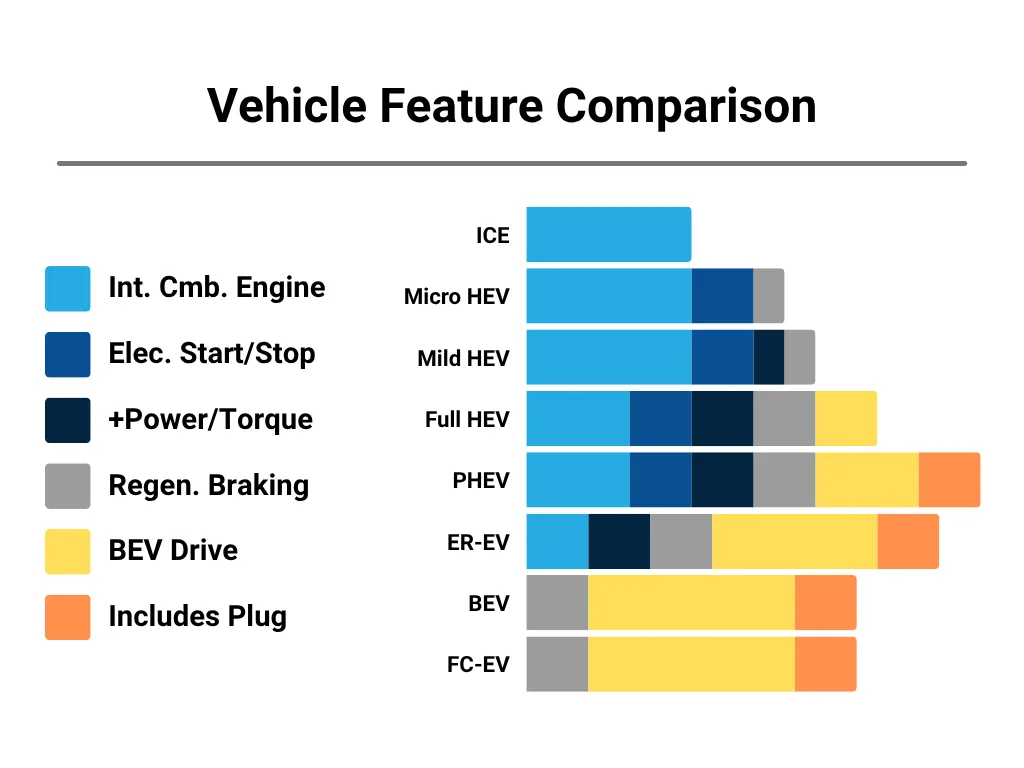
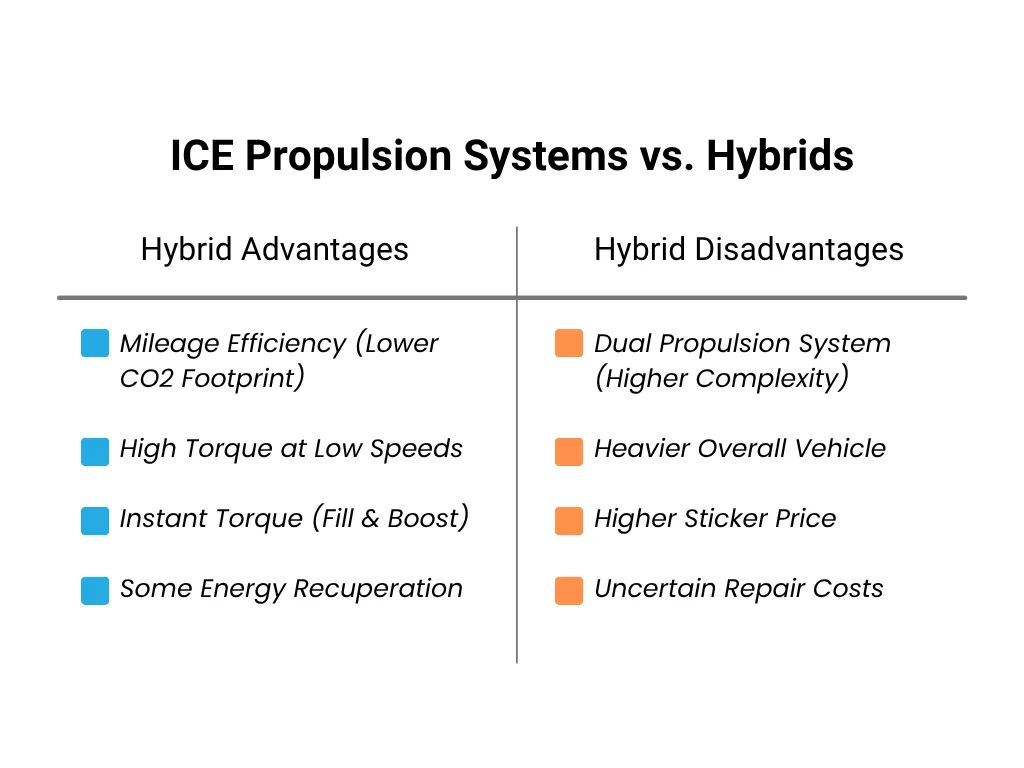
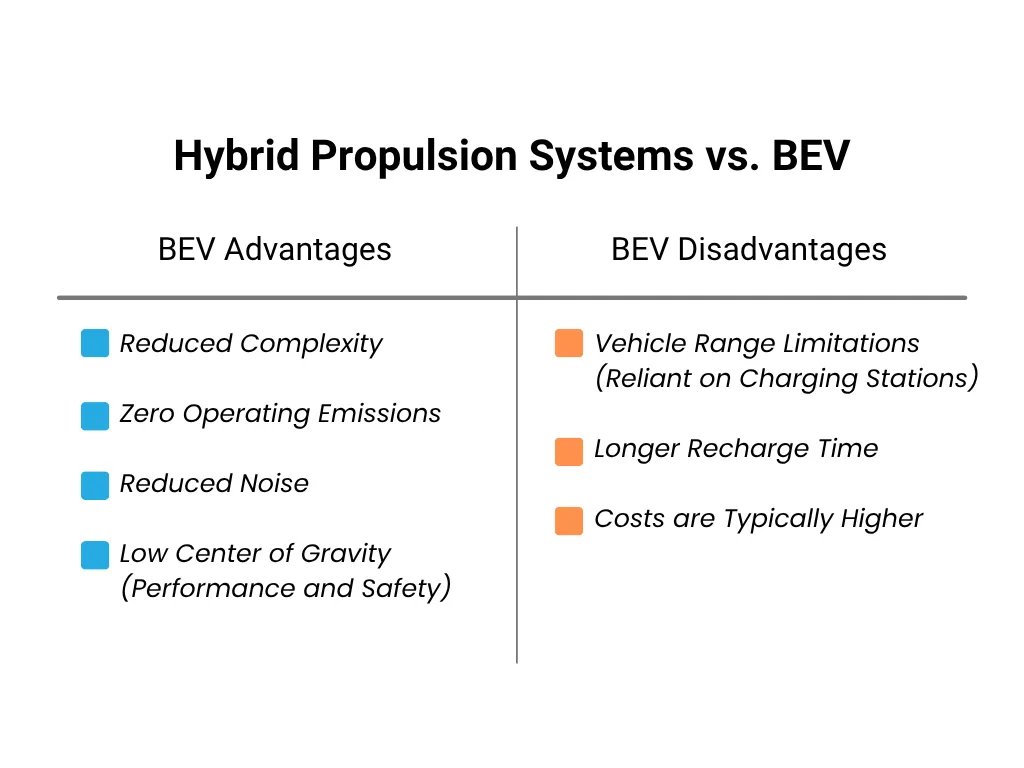
With the homework out of the way, let’s explore the pros and cons of the ICE and EV options at your local dealership. Just keep in mind that performance specs can vary between economy and luxury vehicles.
EV Cost of Ownership Comparison
A comparable EV (size, trim level, features) will generally have a higher sticker price than its ICE counterpart – anywhere from 10-40% more, with entry-level categories seeing the greatest gap. Luxury ICE and EVs tend to be much closer in list price.
Tax credits formerly helped decrease the up-front cost of EVs, but all federal programs which were set to expire in 2032 were instead terminated as of September 30, 2025. Tariffs also come into play, but these affect nearly all cars, even those primarily made in the U.S., due to essential parts and components arriving from overseas.
EV Ownership Challenges
As of Q4 2023, a gas-powered vehicle retains a much higher percentage of its original value over time compared to a BEV; the most recent data suggests an ICE vehicle retains about 50-55% of its value, while a BEV retains about 38-40% after three years.
Recent market anomalies have skewed this relationship, including the microchip shortage (late 2019 to 2021) and the war in Ukraine (gasoline price spikes in 2022). Outside of global conflicts and trade bottlenecks, the most significant factors influencing BEV residual value are:
Pricing trends of new vehicles – Every time an OEM like Tesla, Ford, or VW drops their EV list prices, the impact on residual value for cars on the road is almost immediate.
Battery health/life – The battery represents approximately 30% of the new value of an EV. The government has mandated eight year OEM warranties, with a battery recharge capacity target of 70%. However, there’s no industry standard or a straightforward way for used EV buyers to judge the health of a vehicle’s “engine.”
Overall, the future trends in the depreciation of EVs and long-term maintenance costs are probably the greatest unknowns. We’re monitoring the relevant data closely to judge these factors more confidently, year over year.
EV Ownership Benefits
Vehicle maintenance is an area where many expect EV ownership to offer clear advantages. Organizations like Consumer Reports, Car & Driver, and Triple-A have published assessments on what the future should hold.
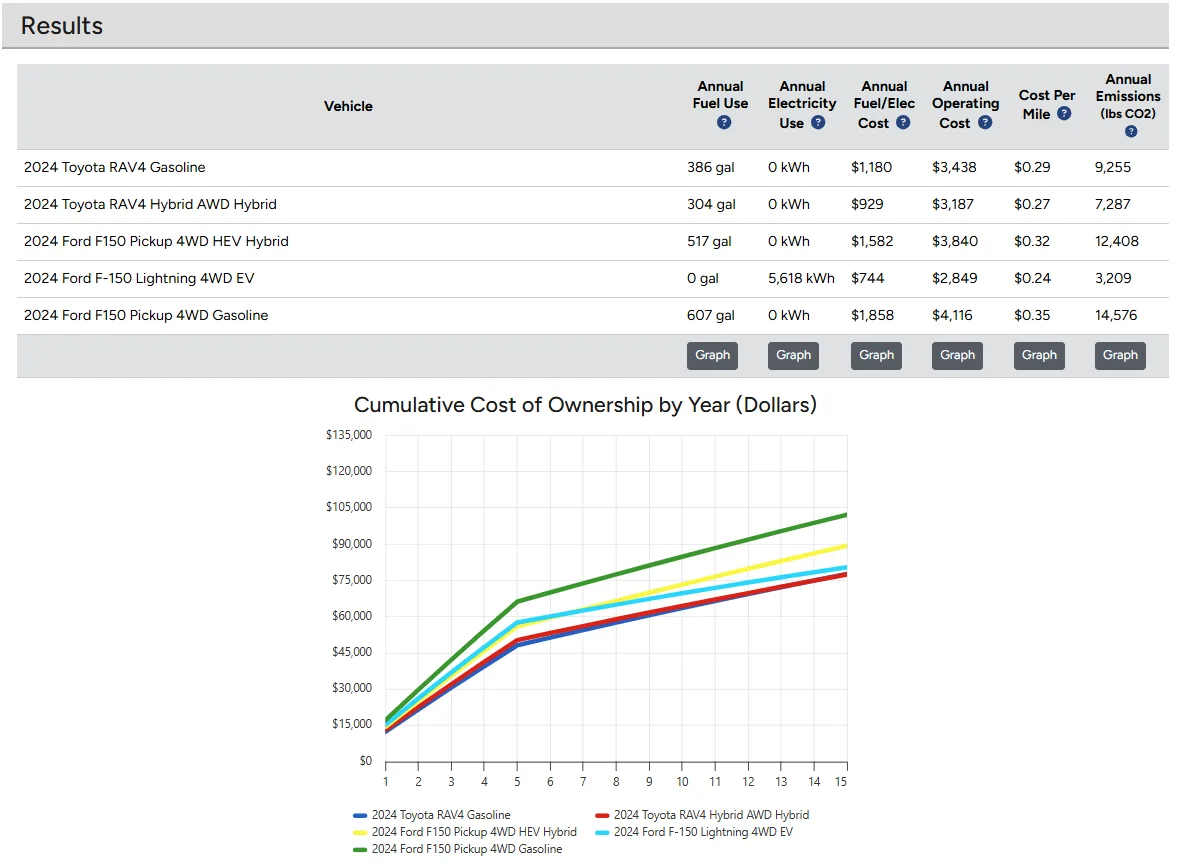
The expectation is that a full Battery Electric Vehicle will have an advantage of 2-4 cents/mile, equating to as much as $8000 in savings over the 200,000-mile life of a vehicle. These savings come from the elimination of fluid and filter changes (oil, transmission, transaxle, etc.) and less complexity – fewer total parts – in the drivetrain.
Fuel cost savings are another strong benefit. Without accounting for unique variables such as regional gas and electricity costs, climate, engine size, and driving habits, we can sum up Internal Combustion Engine vehicles as approximately 1.5-3.0x pricier in terms of annual fuel expense. This cost savings could equate to $1200-$1500 per year for a pickup or large SUV and $700-$900 per year for a mid-sized vehicle over the course of one year of average driving.
If you’re curious what makes this type of performance possible, you can learn more about the Engineered Thermoplastics driving sustainability advances in EVs in the following blogs:
Driving Innovation in Electric Vehicles
Enabling Advances in Electric Vehicles
Polymers Powering the EV Market
Finally, insurance doesn’t seem to be heavily influenced by the type of propulsion system. It focuses directly on the value of the vehicle, instead.
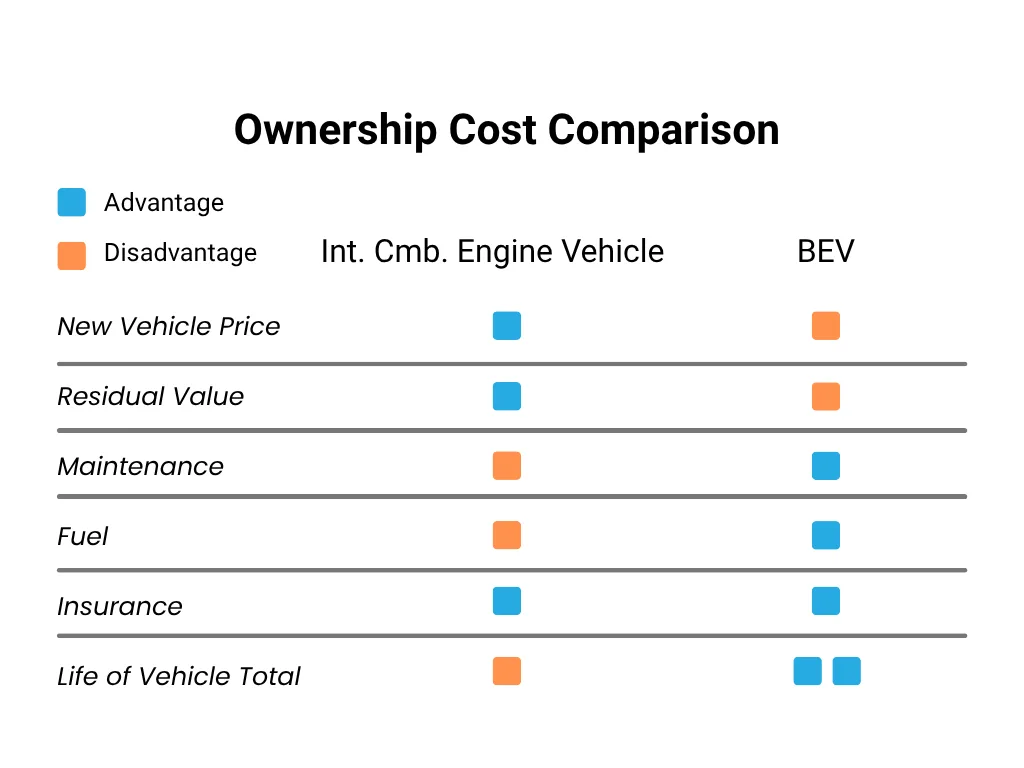
The overall expectation is that a battery electric vehicle will deliver a lower cost of ownership over its life. In fact, the Department of Energy offers a convenient, intuitive cost calculation tool that can help you make your own comparisons! We’ve provided an example analysis below, but you can try it here.
What Lies Ahead
The products of the mobility industry are more diverse today than ever before. Re-engineering the drive train represents the greatest opportunity and risk for this market in our lifetimes.
As material suppliers and OEMs continue to innovate, electrification will no doubt lead us well beyond technologies like lithium-ion batteries. We’ll be here to educate, explain, and evaluate every mobility innovation. We hope you’ll come along for the ride!
Featured Expert: Brian Ahrens

A 35-year veteran of the plastics industry, Brian started his career as a technical service engineer at GE Plastics (GEP) in 1988, followed by 15 years serving GEP in various technical and commercial roles, supporting the automotive market. Brian joined the Entec Polymers sales organization in 2002, which was later acquired by Ravago Holdings America (RHA). He has spent the remainder of his career serving the Ravago group in various roles, from sales management, product management, and manufacturing to international growth initiatives – including seven years on the RHA board; in 2023, he joined Bamberger Amco Polymers. He resides in Michigan with his wife Cherie.
Technically Speaking: Tips & Material Insights
Technically Speaking is a content series empowering product designers, molders, and processors with practical knowledge and real-world insights. These tips are drawn from decades of experience in materials science and application development to help you solve problems faster and smarter. With a diverse portfolio and one of the most knowledgeable tech teams in the industry, we help our customers overcome challenges and bring better products to market.
If you’re unsure which material meets your product requirements, let our technical team guide you through material selection and regulatory compliance.
Disclaimer: The information provided in this post is intended solely for general guidance. Outcomes vary based on individual circumstances, and Bamberger Amco Polymers “BAP", "BA Polymers” does not ensure a specific result. Clients shall use their own independent skills and expertise when testing any application of technical support. Bamberger Amco Polymers is not responsible and will not be liable for any discrepancies between expected and actual outcomes. Bamberger Amco Polymers DISCLAIMS ALL WARRANTIES, WHETHER EXPRESS OR IMPLIED, INCLUDING WITHOUT LIMITATION ANY WARRANTIES OF MERCHANTABILITY OR FITNESS OF A PRODUCT FOR A PARTICULAR PURPOSE.
